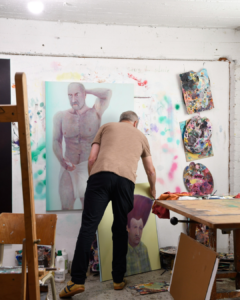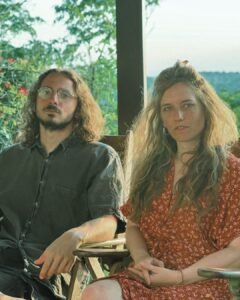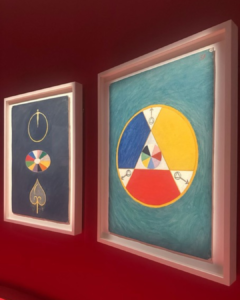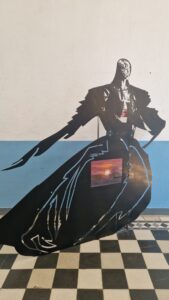
After visiting Insular Animisms an exhibition on the island of Spetses, I left with a number of questions about the role and purpose of artist residencies. The exhibition was the outcome of a residency that had taken place on a six-week artistic creation, bringing together artists who spent time living and working on the island.
As I walked through the exhibition, I found myself wondering: Is it important for resident artists to become involved with the local community? Or is the value of a residency found primarily in the time and space it provides for focused artistic work? Can these two objectives coexist?
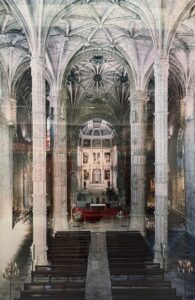
The residency took place at the Anargyrios and Korgialenios School of Spetses (AKSS), a former boys’ boarding school that operated from 1927 until 1983. The Art Residency Programme was launched as a pilot initiative on 2025 and this year’s edition marked a further step in exploring how the site can be reactivated as a place of artistic production, exchange, and learning.
Most residency programmes offer artists the opportunity to live and work alongside others. Emerging and established practitioners, artists from different disciplines, and individuals with diverse cultural backgrounds come together for a limited period of time. Such encounters can foster conversations, collaborations, and new perspectives. Residencies can also provide opportunities to engage with a specific place and community, encouraging artists to learn from local histories, environments, and ways of life.
Yet the relationship between artists and communities is not always straightforward. Some residencies place strong emphasis on public engagement, workshops, and community participation. Others prioritise solitude, research, and experimentation, allowing artists to focus on their practice without the pressures of production or public presentation.
Neither approach is inherently better. Meaningful engagement with a community can enrich an artist’s understanding of a place and create forms of exchange that extend beyond the residency itself. At the same time, artists often seek residencies precisely because they offer something increasingly rare: uninterrupted time to think, make, and reflect.
Perhaps the most productive residencies are those that leave room for both. Community engagement can emerge organically rather than as an obligation, while artistic work can remain open to influence from the people and environments encountered during the residency. In this sense, the residency becomes less a retreat from the world and more a temporary space of encounter between artists, places, and communities.
The questions remain open. What responsibilities do artists have towards the places that host them? How much engagement is enough? And how might residencies create conditions that support both artistic autonomy and meaningful connection?
Info
Insular Animisms
Anargyrios and Korgialenios School of Spetses Foundation
Participant Artistis:
Nabil Aniss, Nona Inescu, Myrto Vratsanou, Mariangela Ciccarello, Konstantinos Papanikolaou and Matilde Meireles
Artistic director: Eva Vaslamatzi
Coordination/Production: Simone Niarou
Duration: 5 June – 30 August
Opening hours: Wednesday to Sunday 7pm – 10pm
Photos: © waveL art team