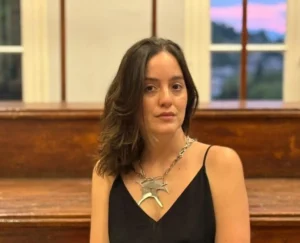
Katerina Nikolaou
Art Curator and Cultural Project Manager
Founded by Akis Kokkinos in 2021, DEO Project has now been running every July for six years on the island of Chios. As a nomadic non-profit organization, it has presented ambitious exhibitions and public programmes across the island.
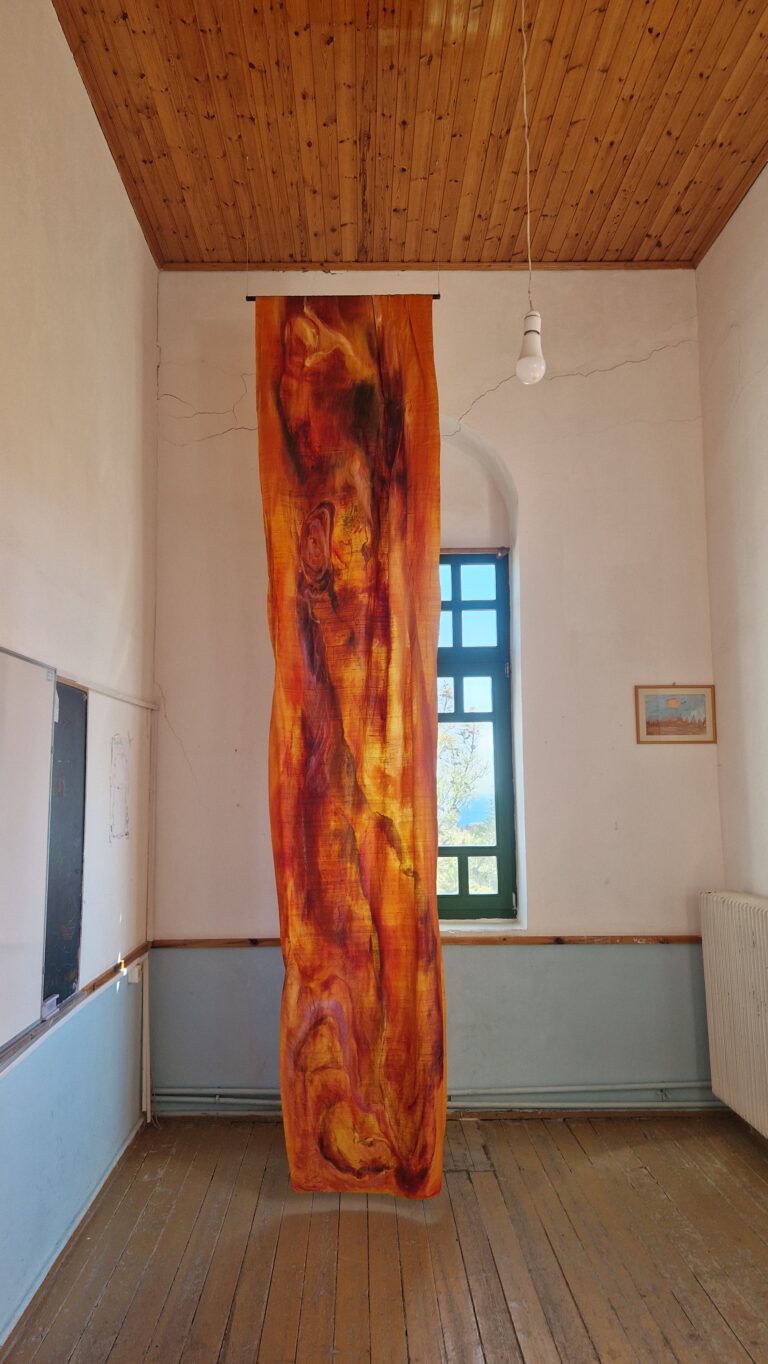
This year, the exhibition Letter to an Ailing Father is set in the northern reaches of Chios, where the wind carries both the scent of the sea and the memory of last year’s wildfire. The exhibition takes place at the public school of Volissos, the principal village of Amani, a building that for more than a hundred years has continued to serve local children during the school year. This summer, however, it is doing something different: hosting an international art exhibition.
The main theme of the show is the paternal figure as a site of authority, absence, and emotional deprivation, as outlined in the curatorial statement. The “father” of the title is not simply a person; he is an idea, a symbol of protection, care, and strength. And yet, here, he is fragile. Absent, perhaps. Unable to shield those who depend on him. This question resonates differently in Amani. Last August’s wildfires left a mark on the area, and the exhibition engages with that reality without turning it into a cliché. Rather than focusing solely on damage, it looks at how people react, adapt, rethink, and rebuild.
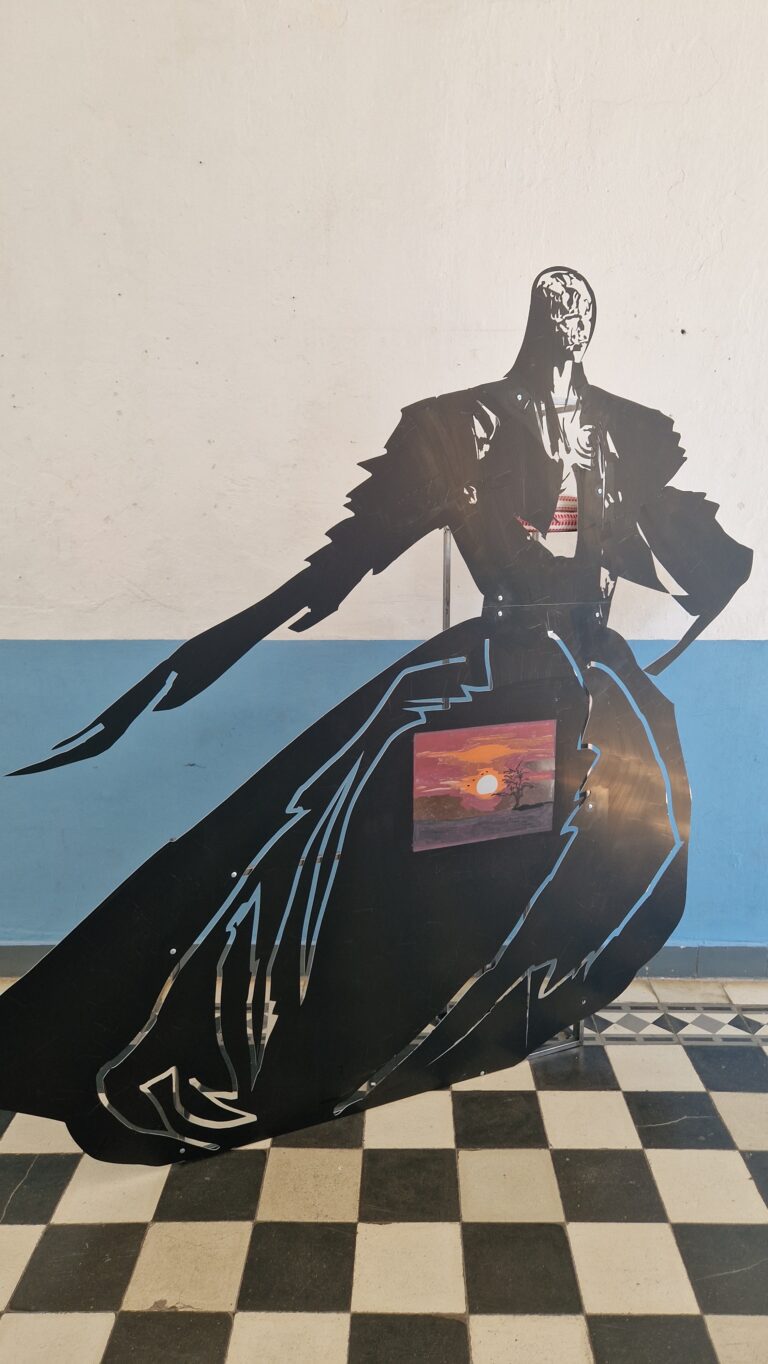
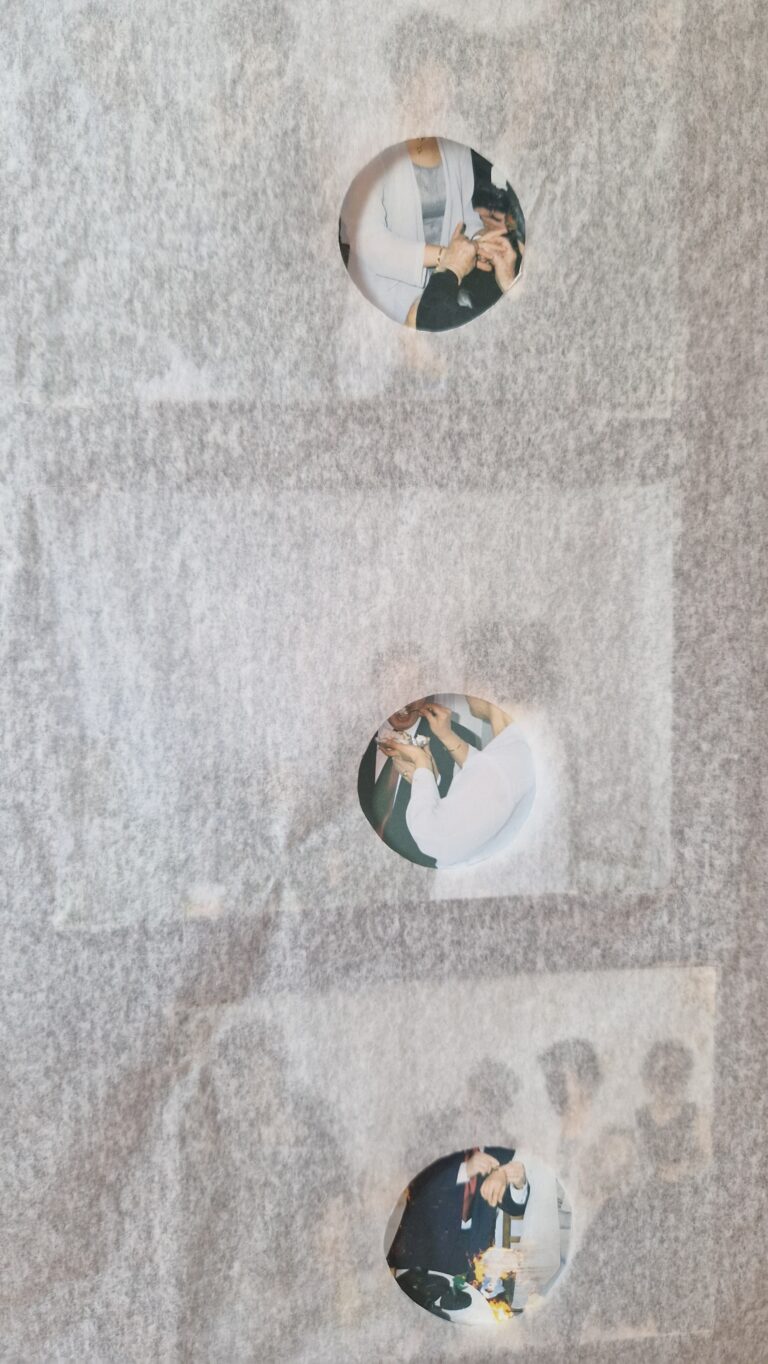
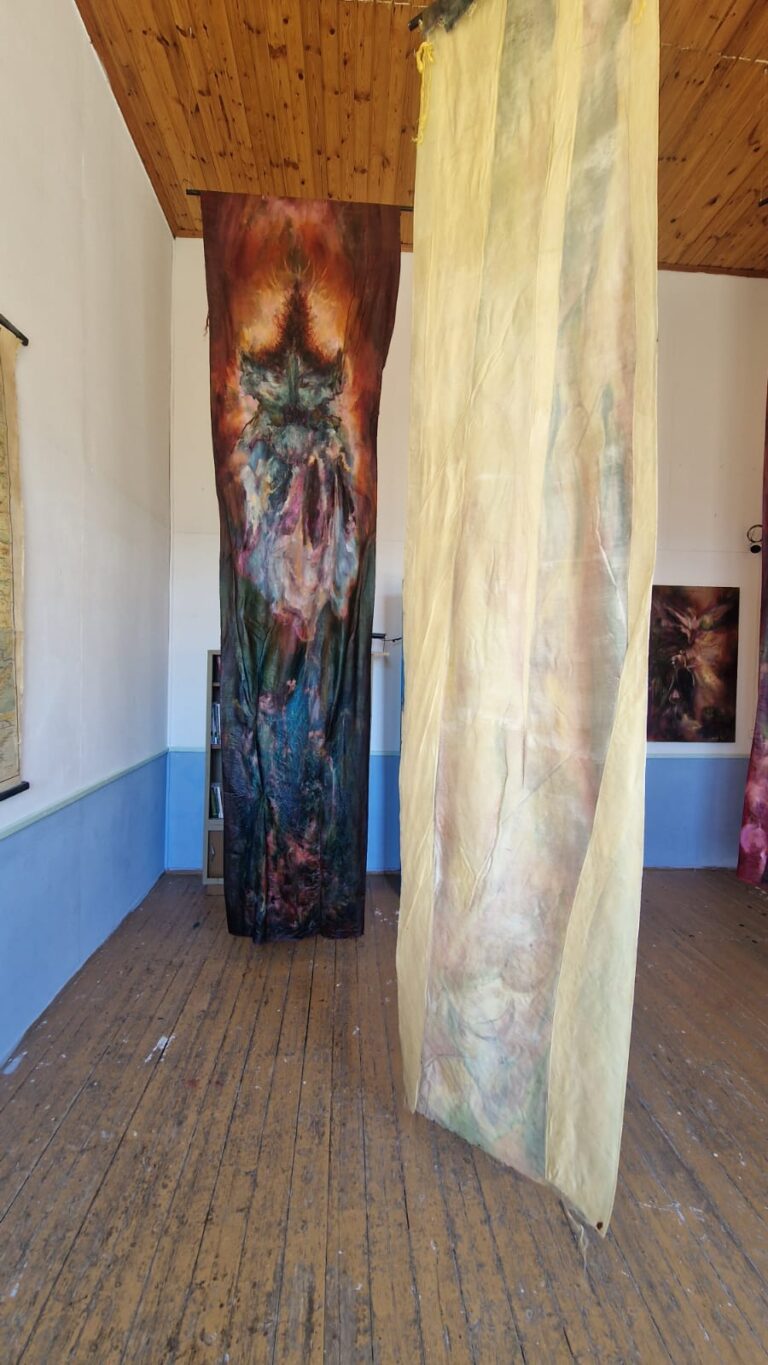
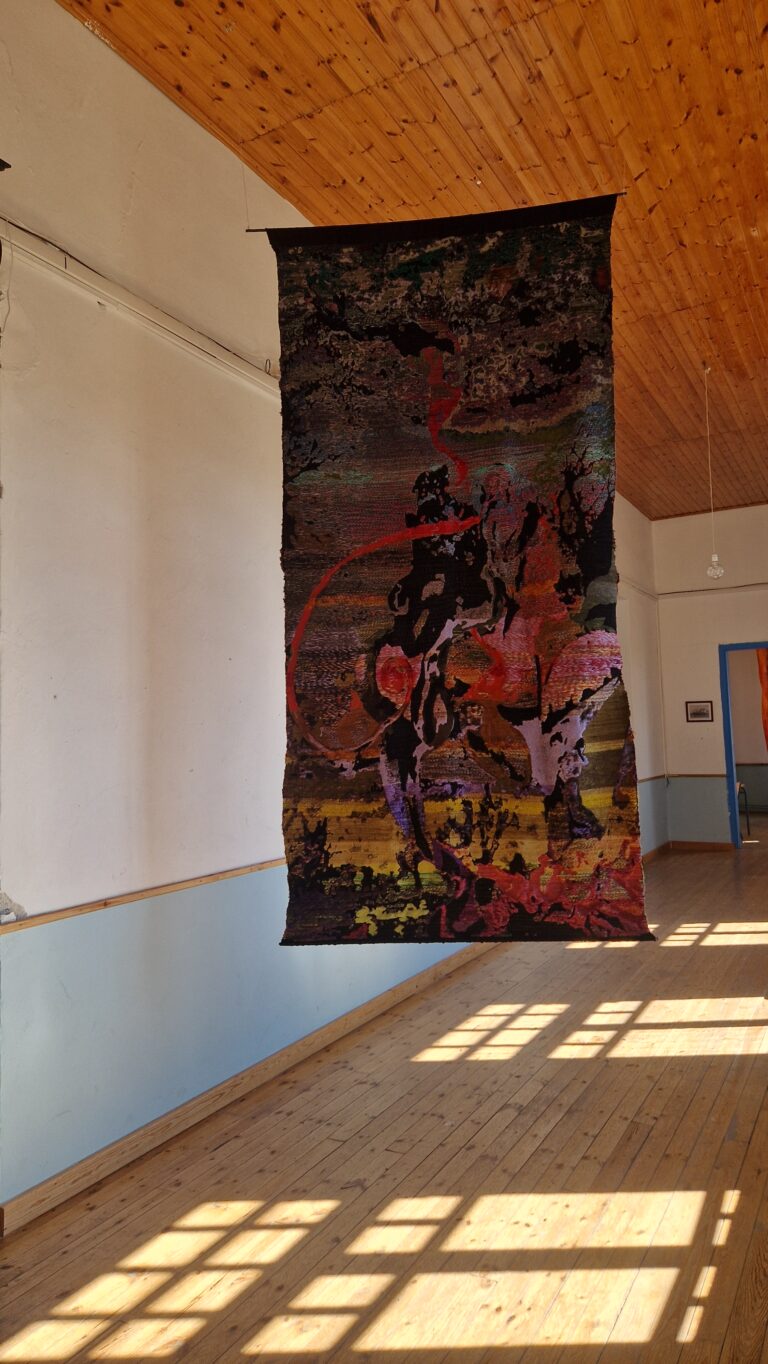
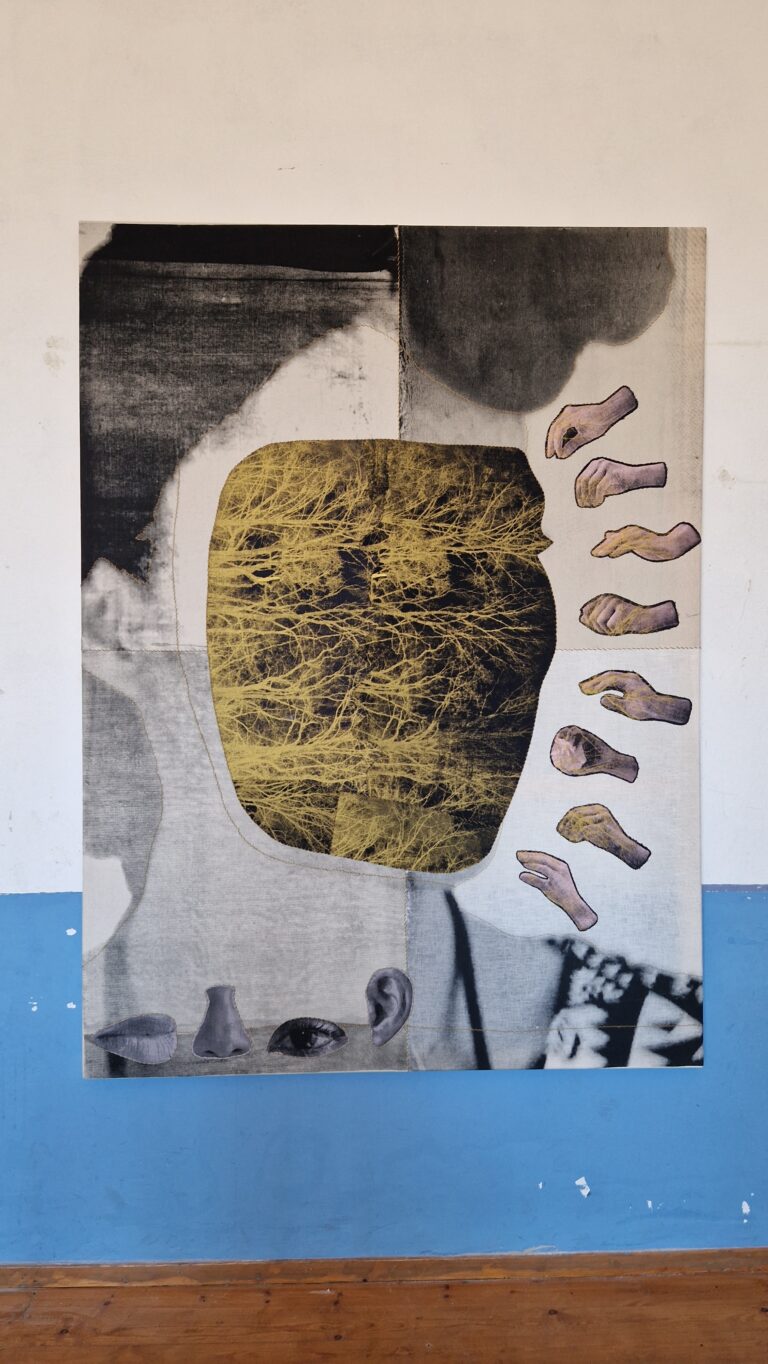
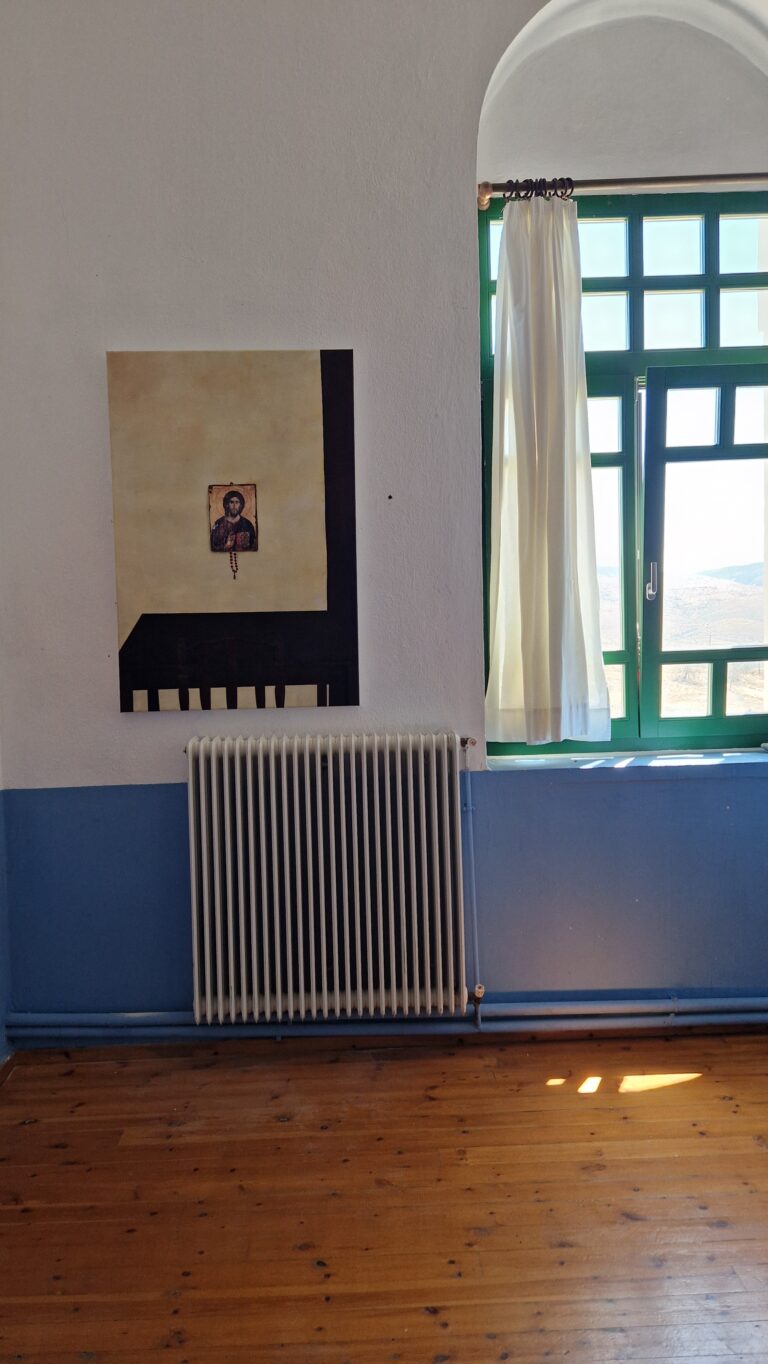
And evidently, the artists respond. Fourteen artists, Arda Asena, Shezad Dawood, Md Fazla Rabbi Fatiq, John Gerrard, Evi Kalogiropoulou, Lito Kattou, Eleni Odysseos, Zohra Opoku, Vasilis Papageorgiou, Cindy Sherman, Kiriakos Tompolidis, Nasan Tur, Paky Vlassopoulou, and Danh Võ, from eleven countries present new commissions alongside existing works across a range of media, including painting, photography, sculpture, textiles, sound, video, installation, and digital media. Within the imposing stone building, the works are spread across classrooms, corridors, and different levels. You move through them almost as if reading different parts of the same conversation. Practices of craft, preservation, and tradition emerge as forms of collective care.
Nothing here attempts to offer a clean answer. Instead, the exhibition reframes the question: if the systems or figures we rely on are not enough, what replaces them? What does care look like then, and who becomes responsible for it?
Volissos is not just a backdrop; it is part of the story. The exhibition feels less like a statement and more like a prompt. You walk through it, reflect on it, and perhaps carry it with you after leaving. As curator Akis Kokkinos stated during the opening: “Our role is to be present with practices of care.”
The exhibition runs until 30 August 2026, accompanied by an extensive public programme.