Mariandrie Chrysostomou
Visual Artist
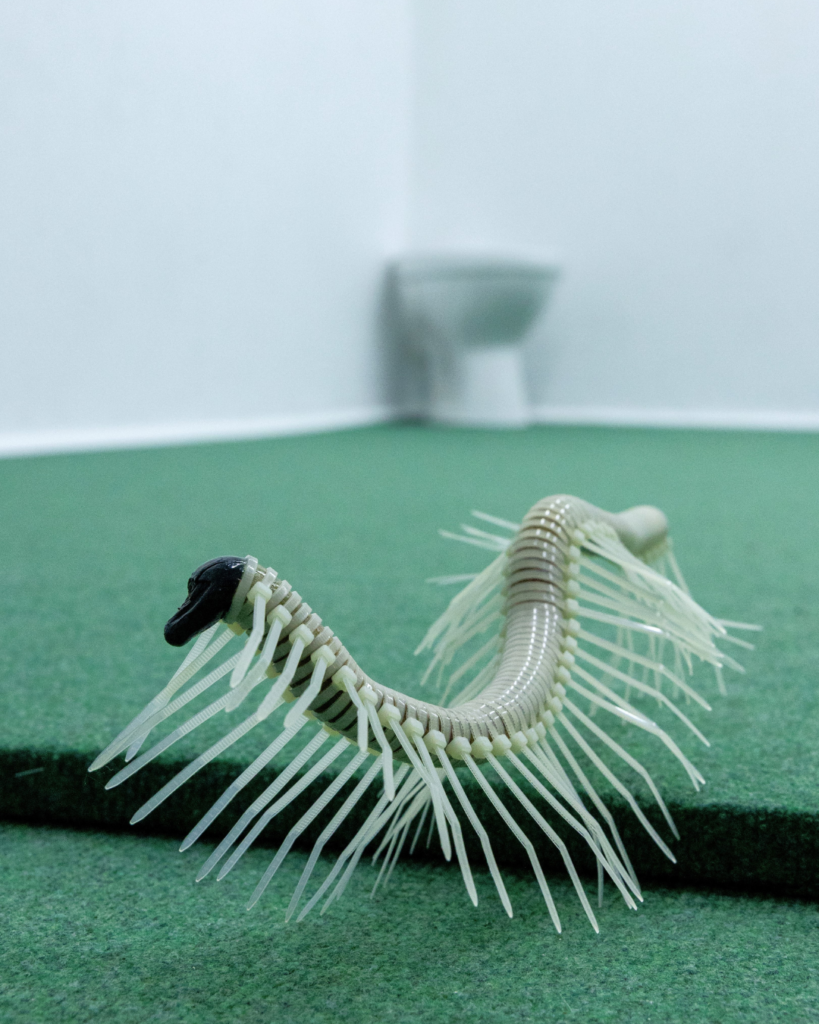
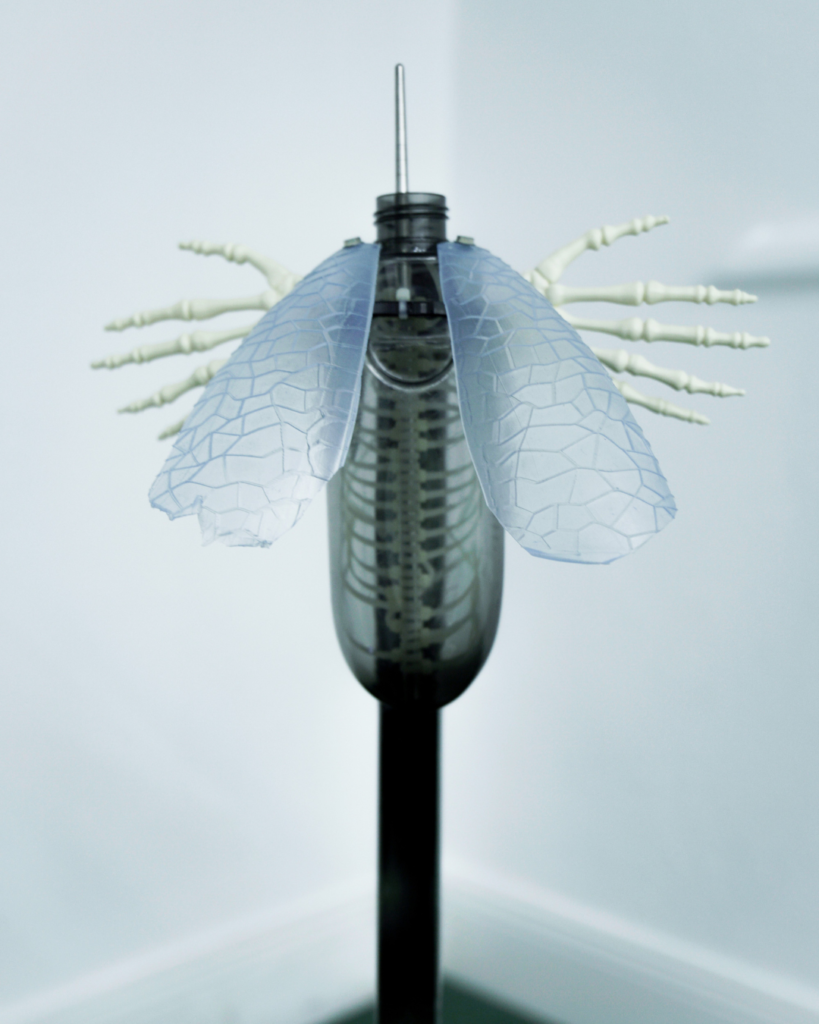
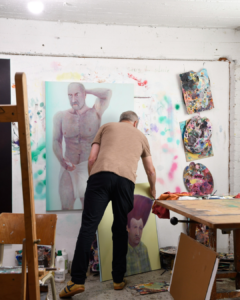
We had the pleasure of visiting Yorgos Agrotes, a Cypriot visual artist, at his studio to discuss his artistic practice and latest solo exhibition. Agrotes studied painting at Aristotle University of Thessaloniki and holds an MFA in Visual Arts from the Athens School of Fine Arts. His practice critically examines the illusions that shape perception, particularly those related to societal constructs, power dynamics, and imagined futures. Through painting, sculpture, and installation, Agrotes deconstructs reality to expose the contradictions embedded in human existence. Agrotes recently reallocated back to Cyprus after nearly a decade abroad.His personal experience of displacement, alongside the political reality of a divided Cyprus, has profoundly shaped both his perspective and his artistic practice. Below, you can read our interview with the artist.
Your work moves so naturally between painting, sculpture and installation. How do you find a balance between these different forms? Is it something that comes naturally to you, or is it a more intentional decision?
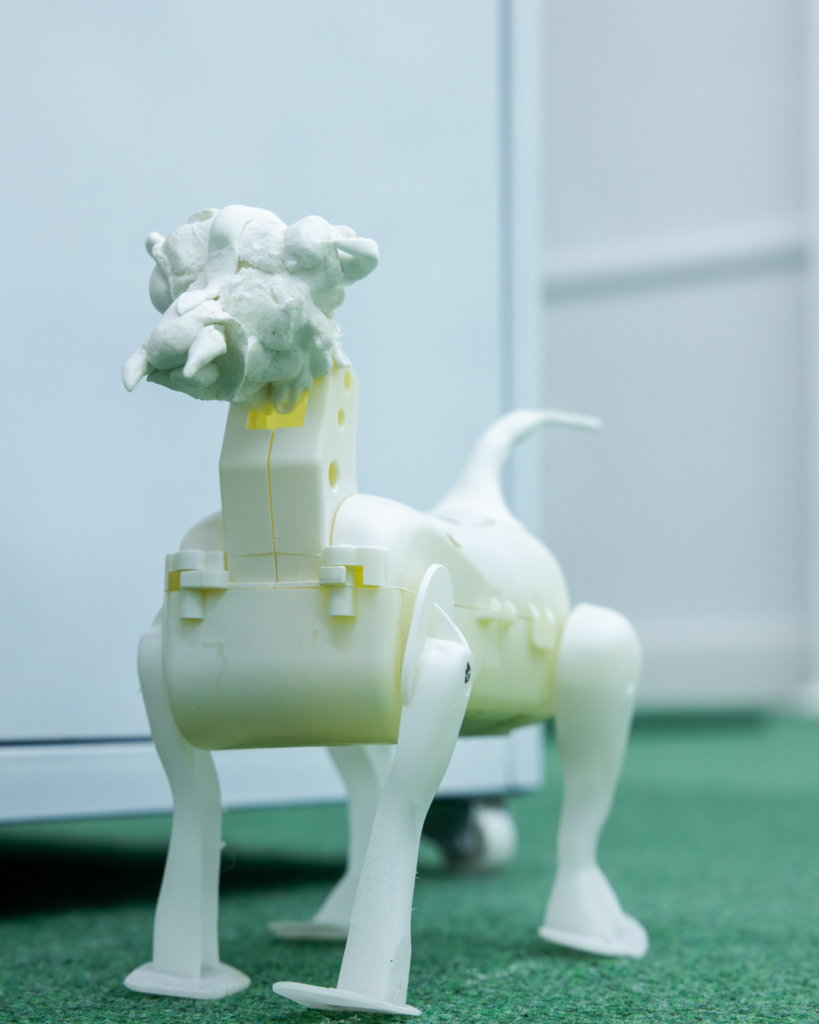
I always want to experience something different, and each time I approach a new medium, I realise that the methodology is actually quite similar. I usually start with something in my mind that isn’t completely clear, and then I trust the process to take me somewhere. Not everything works, and I’m okay with that. Even when a piece fails, I usually discover a technique, material, or way of thinking that stays with me and finds its way into the next one. At this point, I also feel a need to create an experience, which naturally pushes me between painting, sculpture, and installation and lately sound. But honestly, I just enjoy each form differently.
Indeed, this sense of fluidity comes across in your work. There’s also something very contemporary about your visual language, which seems to capture the spirit of our time while also helping define it. With that in mind, could you tell us more about the ideas behind your latest solo exhibition in Thessaloniki?
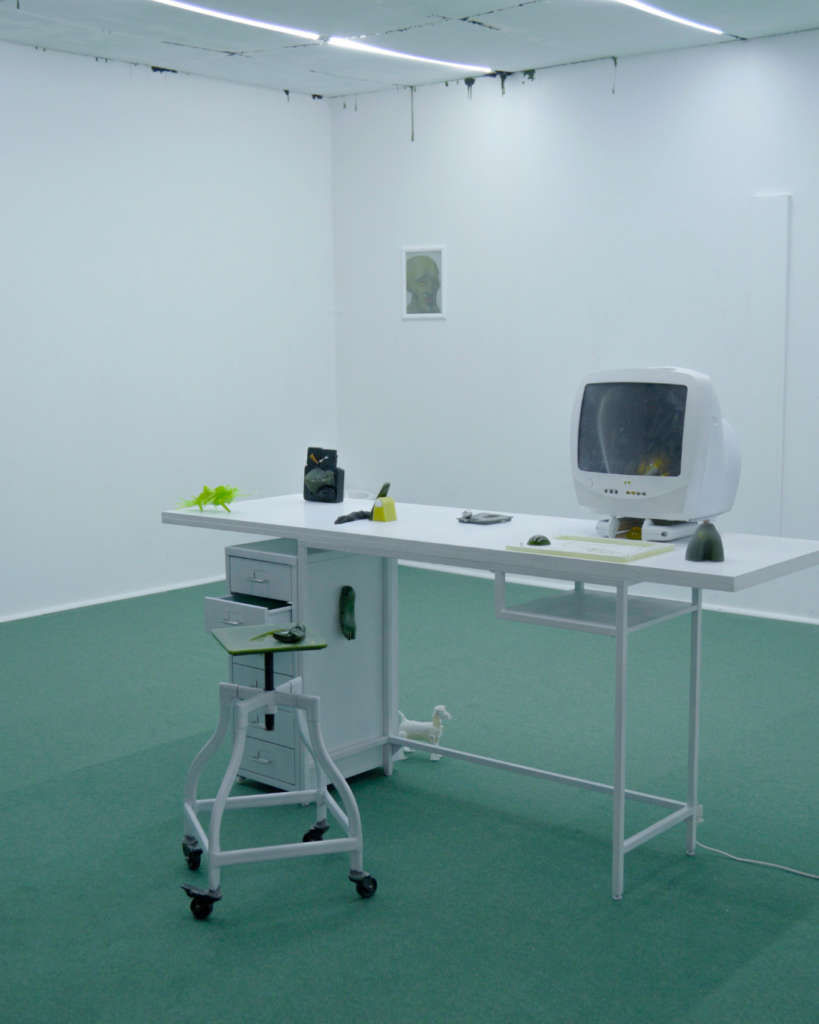
P.D.A._ at The Eye Altering started from an interest in how much of our everyday life is already shaped by systems, rules,and roles that we accept almost automatically. I wanted to turn that into an experience rather than simply make a show about it. But more importantly the idea came by brainstorming with the curator Eleni Giannakouli each day through the process of building the installation. The exhibition was set up like a strange corporate environment.
What do you mean by that? How?
You would arrive expecting to see an exhibition, but instead you were put in a line, interviewed, given a badge, and gradually assigned a role. The whole situation felt slightly familiar, but also uncomfortable. Working with Eleni allowed the project to move beyond simply representing these ideas. The curatorial structure became part of the work itself, so the audience didn’t just look at the system from the outside, they experienced it from within. You were no longer just a visitor, you became part of the system. For me, P.D.A._ was about that moment when something ordinary starts to feel absurd. Work, productivity, hierarchy, bureaucracy, even the way we behave in public are full of invisible rules that we learn to follow. I wanted to exaggerate those structures just enough for people to become aware of them.
And what about the title?
The title, Public Displays of Affection, also comes from that contradiction. It usually describes something intimate being made visible in public, while the exhibition was interested in what happens when our behaviour, emotions, and even our identities become something that is publicly performed and managed. So rather than asking the audience to look at the system from the outside, I wanted them to experience it from within.
Your work also touches on the relationship between personal identity and the wider social and cultural environment. How has growing up in Cyprus shaped your practice and the way you approach your work?
Coming from Cyprus, and particularly from a small village in Famagusta, has influenced my practice primarily through my relationship to place and distance. Growing up in a relatively contained environment, the village initially represented my entire frame of reference. Leaving it created a distance that allowed me to reconsider the place I came from, as well as the values, behaviours, and perceptions I had developed within it. That experience made me increasingly aware that our understanding of reality is shaped by our surroundings and by the contexts we inhabit. Distance can therefore become a way of looking, once you step outside a familiar environment, you are able to observe it with a different level of awareness. This has become an important aspect of my practice. I am interested in how places, memories, and social structures influence perception, and how that perception can shift when we move between different environments. Rather than treating Cyprus as a fixed subject within my work, I see it as part of the perspective from which I approach questions of place, identity, memory, and reality.
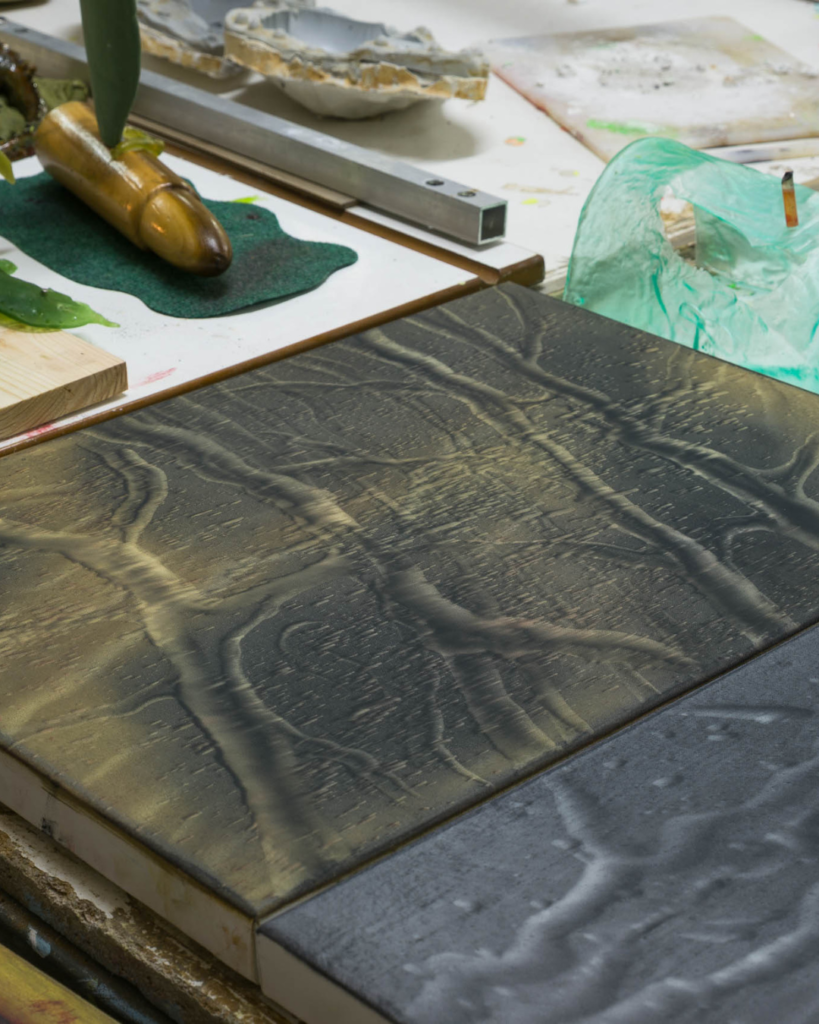
There is a sense that you are creating a space even within your paintings. Your approach to painting has something almost digital about it, while the way you apply and build up the paint gives it a very distinctive quality. Do you see this as a way of constructing or reshaping reality?
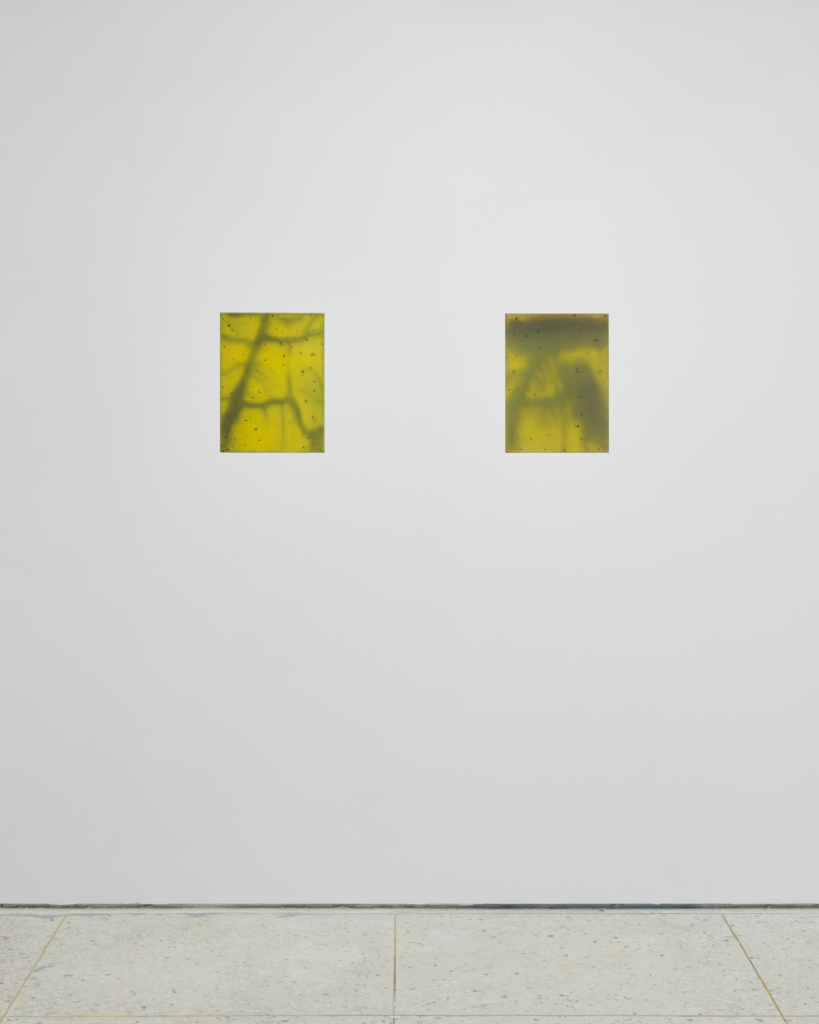
I feel that I’m always questioning reality rather than consciously constructing or reshaping it. The space within my paintings comes from that questioning, trying to understand what reality looks like when our perception of it is constantly changing. I think it’s impossible to deny that a large part of our lives now exists through social media and digital spaces, sometimes even more than in physical reality. That has inevitably affected my paintings. They have become less about representing something and more about questioning how representation itself is changing. We experience so much of the world through images before we experience it directly, and I find that tension interesting.There is also something familiar to me in the idea of nature being digitalized. By nature, I mean both the natural world and our own human nature, our bodies, emotions, behaviors, and ways of thinking. These are increasingly being processed, measured, categorized, and translated into data. In that sense, my paintings become a space where these different realities overlap: the physical and the digital, the natural and the constructed, the image and the thing itself. I’m not trying to offer a new version of reality, but to question what reality has become and how we are learning to perceive it.
Visiting Yorgos Agrotes offered a closer look at his practice, the ideas behind his work, and the ways he approaches different mediums. Our conversation explored some of the questions that continue to shape his work, and we hope you enjoy reading it as much as we enjoyed the conversation.