Katerina Nikolaou
Art Curator and Cultural Project Manager
Seeing Frida: The Making of an Icon at Tate Modern made me reflect on the power of popular culture and, more specifically, on how Frida Kahlo became a figure whose influence extends far beyond the boundaries of the art world. How did this woman, whose life was marked by physical suffering, political commitment and personal turmoil, become one of the most recognisable faces of modern art? The exhibition’s catchy title immediately sets the tone, suggesting that what is at stake is not simply an encounter with Kahlo’s paintings, but an exploration of the making of a cultural phenomenon.
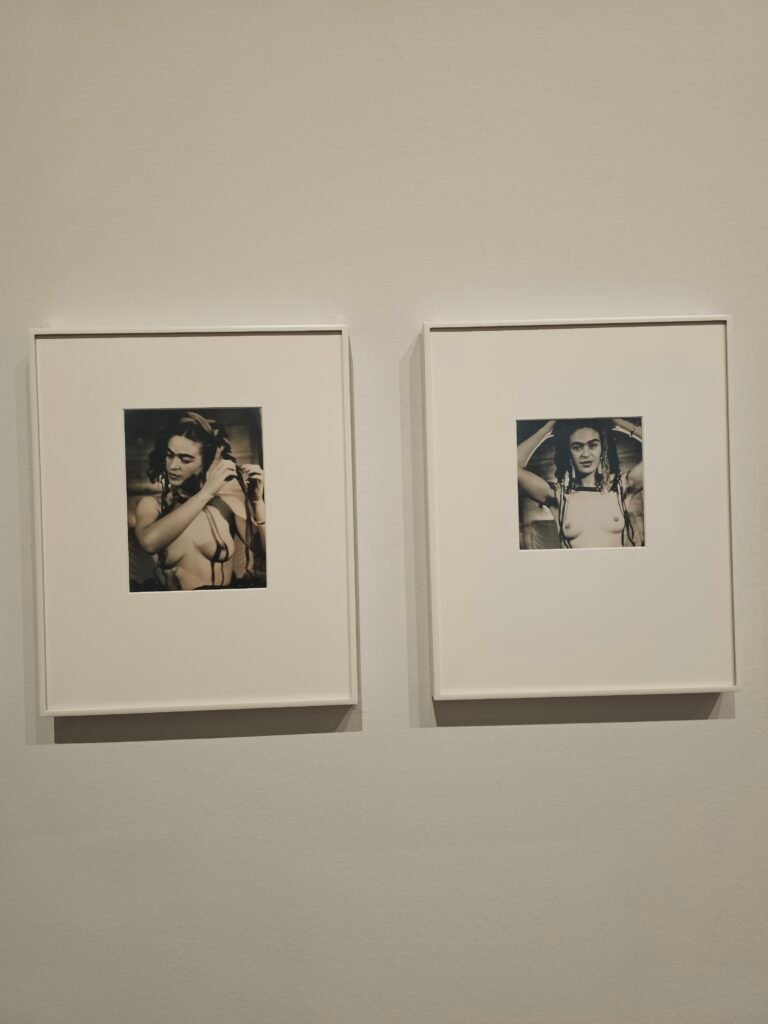
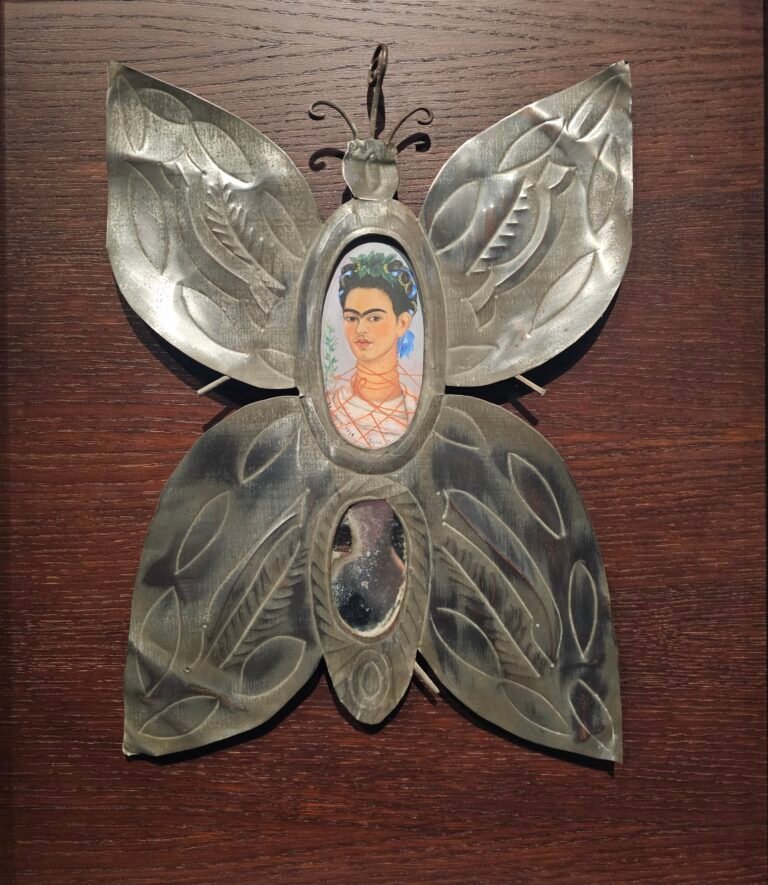
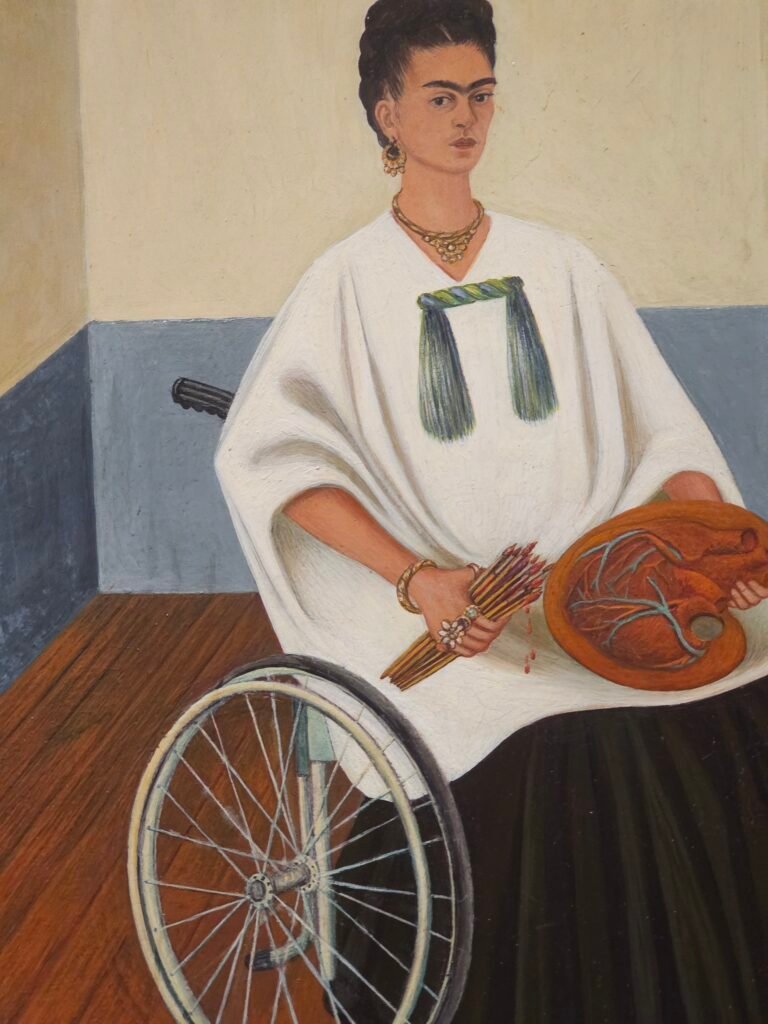
Visitors are introduced to more than thirty of Kahlo’s most iconic works, presenting her many selves: the devoted wife, the intellectual, the modern artist and the political activist, as described in the exhibition’s press release. Seeing these works brought together is fascinating, allowing visitors to trace the different facets of an artist who repeatedly turned her own image and experiences into artistic material. Yet the exhibition extends well beyond Kahlo’s paintings. Alongside them are approximately two hundred works by her contemporaries and by artists from later generations whom she inspired, celebrating her lasting impact on those who continue to reimagine and reclaim her story.
It was precisely this abundance that left me feeling somewhat unsettled as I walked through the exhibition. I became increasingly aware of the tension between Frida Kahlo the artist and Frida Kahlo the icon. Although the exhibition follows a discernible narrative, the relatively small number of her own paintings, presented alongside a much larger body of work by her contemporaries and later generations of artists, gradually shifts the focus away from her artistic practice. Rather than offering an in-depth exploration of Kahlo’s work, the exhibition sometimes feels more like a tribute to the cultural phenomenon that has grown around her.
I began to wonder how this transformation took place. How did Kahlo become not only an acclaimed painter but also a global symbol, reproduced, circulated and reinterpreted across generations and cultural contexts? And what does this extraordinary afterlife tell us about the relationship between art, identity and popular culture?
This is where the curatorial approach puzzled me. The works by other artists undoubtedly demonstrate the extent of Kahlo’s influence and the many ways in which her image has been reinterpreted, reclaimed and appropriated. Yet the sheer volume of these responses raises a question about what the exhibition ultimately seeks to achieve. Does it help us understand Kahlo’s artistic significance, or does it primarily illustrate the scale of her posthumous fame?
This tension is also evident in Brian Dillon’s review for The Art Newspaper, in which he questions whether the exhibition’s final gallery, devoted to the proliferation of Kahlo’s image, offers a sufficiently critical examination of Fridamania.
The display of countless appropriations and commercial objects does not necessarily clarify the mechanisms through which an artist becomes an icon. Instead, it risks leaving you uncertain whether the exhibition is critically examining this phenomenon or simply reproducing it…